How Do You Get Kids to Do Chores Without Using Rewards?
(What Holds Up When There Is No Prize)
The research on rewards is narrower than the headlines, and the everyday jobs run fine without a prize. Here is what we use in their place.
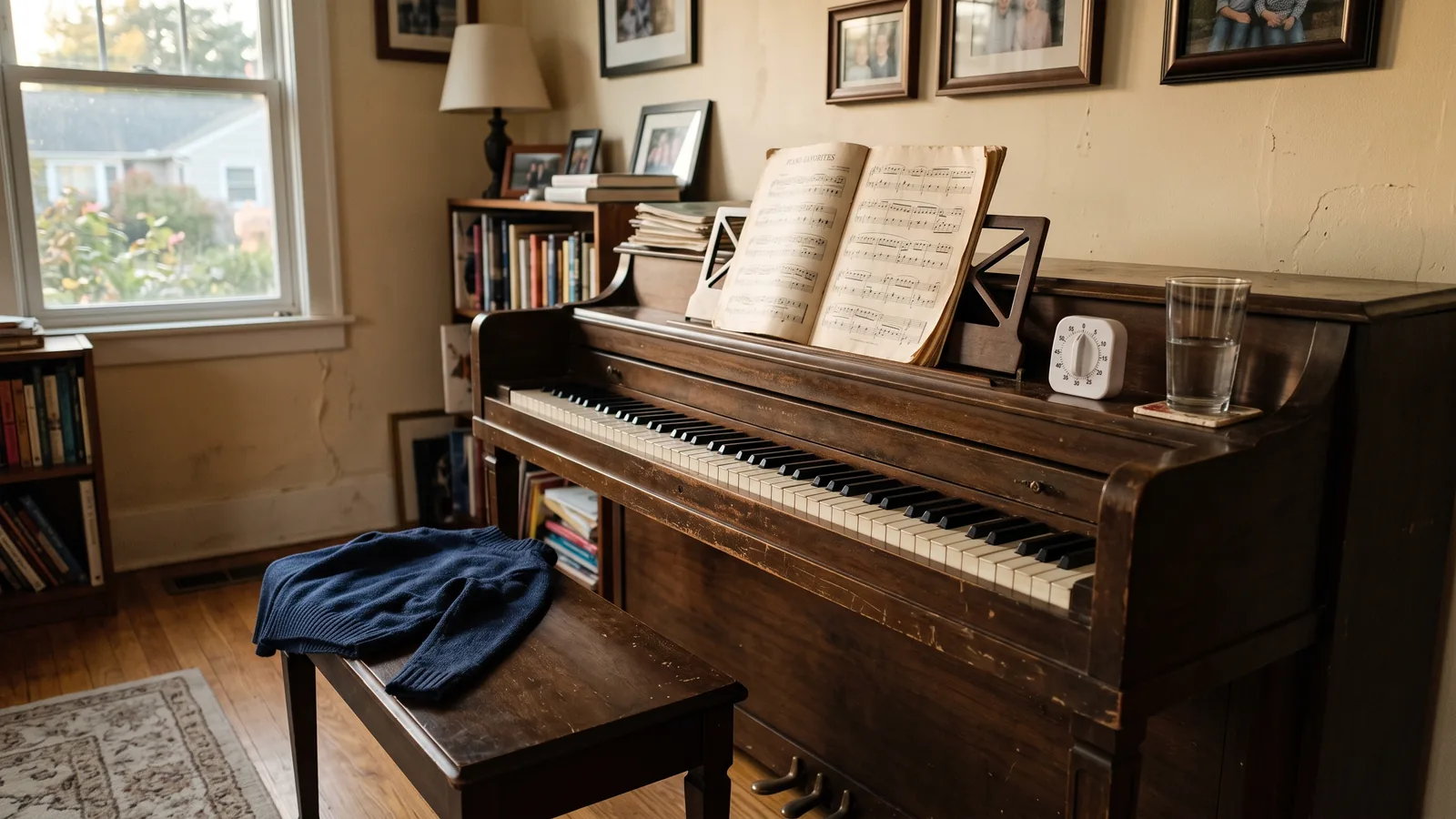
On the second of September my seven-year-old was partway through his Duolingo and picking out some notes on the piano, neither of which was on any list, when he stopped and said, "Dad, can I create a chore for myself? I have an idea." Then he opened GrowTide and submitted one: five minutes of piano, every day.
Nobody had assigned it, nobody was paying for it, and nobody had prompted him. It felt like the system was finally clicking. One request is not a habit, and I will come back to that at the end.
To get kids to do chores without rewards, treat the chore as part of belonging to the family instead of a deal: keep a short list of expected jobs, define what done looks like, attach each job to a point in the day such as before screens or before dinner, and give specific feedback instead of a prize. I should say up front that we do use rewards in our house, on top of that base layer. They are just not what holds it up.
Do kids need rewards to do chores?
No, not for the everyday jobs that come with living in the house, and the research people cite against rewards is narrower than it sounds. A 1999 meta-analysis of 128 studies found that tangible rewards undermined free-choice intrinsic motivation and self-reported interest, that the damage was greater for children than for college students, and that positive feedback did the opposite (Deci, Koestner & Ryan, Psychological Bulletin). The catch is what those studies measured. As Psychology Today's summary of the literature puts it, the tasks were often ones that are "interesting and typically fun to do." Very few kids find a bathroom sink interesting, so I would not claim the research proves rewards ruin chores. It supports something smaller: when a kid already has some reason to do a thing, a prize can muddy it.
What does the research say about rewards and kids helping at home?
Two lab experiments with very young children are the ones people lean on. In the 1973 marker study, preschoolers who expected a reward certificate for drawing lost interest compared with children who got a surprise reward or none (Lepper, Greene & Nisbett). In 2008, 20-month-olds who received a material reward for helping were less likely to help afterwards than infants who had been praised or given nothing (Warneken & Tomasello, Developmental Psychology).
Neither one involved an eleven-year-old and a dishwasher. I read them as a reason to be careful with prizes rather than a verdict, and the wider evidence that chores build responsibility is thinner than people claim, which I went through in whether chores really make kids more responsible.
What do you use instead of a reward?
Five plain things do the work a prize would otherwise do. None of them costs money, and most of them cost you a little thinking once and then nothing.
| What replaces the prize | What it looks like | Why it holds |
|---|---|---|
| Belonging | Making your bed, clearing your dishes and putting laundry in the basket are unpaid, because that is how the house runs | There is no price to negotiate and no deal to renegotiate |
| A fixed point in the day | Before screens, before dinner, before bed | The kid can see the deadline coming without you announcing it |
| A named finish | Sink, mirror and counter, instead of "clean the bathroom" | Done is checkable, so nobody argues about whether it counts |
| Specific feedback | "The sink and mirror are done, the counter still has toothpaste on it" | It is the kind of positive feedback the 1999 meta-analysis found helped |
| A say in the timing | The older two pick which days they do a rotating job, not whether they do it | A little control buys cooperation for free |
The one that surprised me was how much the named finish matters. Half of what looks like a kid refusing a chore is a kid who cannot tell what the chore is.
Isn't "no screens until chores are done" just a reward?
Partly, and it is better to say so. A privilege that happens every day regardless is part of the background of the house. A reward is offered as a deal for one particular act. "Chores before screens" stays the first kind as long as you never haggle in the moment, so no "do this one and you get extra time." The sequence is the rule, and nothing is being bought.
But sequencing has a cost. When we made screen time fully earned, it started to feel to my oldest like a debt he was owed rather than a treat, and I wrote up what went wrong in screen time as a reward for chores. If you use the sequence, keep the screen allowance fixed on its own track so it never turns into a wage.
What do you say when a kid asks "what do I get?"
Say the same sentence every time and let the day go on: being part of a family means you help out to keep the house clean and your stuff clean. It did not persuade my oldest at nine, and it did not persuade him the tenth time he heard it. By thirteen the resistance had dissolved. You do not win this argument, you outlast it, and a late start makes it harder. We introduced the idea at nine, ten and twelve for the older boys, and unwinding years of just-let-it-happen cost us a rough quarter that would have been a few tantrums at four.
The sentence only works if what follows is consistent. When a job does not happen, let the result stand instead of rescuing it, which is the subject of what actually happens when a kid skips a chore. And for the longer argument about why helping the family is not a wage in the first place, see why kids won't do chores without being asked.
Do we use rewards at all in our house?
Yes, in layers, with the unpaid layer underneath. The expected chores are unpaid and carry no prize. On top of them sit paid jobs that rotate, capped at about $10 a week per kid and paid for the finished job. Extra jobs are optional. Screen time runs on its own separate track. The two-track split is laid out in whether allowance should be tied to chores.
Back to the piano. A single request is not a habit, and one afternoon is not a result. If it is still on his list in three months, that will tell me something. For now it told me that a chore can be something a kid pursues, struggles with and learns through, rather than something he gets clear of. I cannot build that on purpose. I can only keep the base layer steady enough that there is room for it. If you want to see how we run the layers, here is how GrowTide works.
Vince is a dad of four and the founder of GrowTide — a family chore and rewards app built by a parent who needed it to actually work. Download GrowTide
This post is one parent's experience, not professional parenting, medical, or psychological advice. Every kid is different, and if what you're dealing with is bigger than a chore system can hold, a family therapist or your pediatrician is a better starting point than a blog.
Frequently asked questions
Do kids need rewards to do chores?
Not for everyday family jobs. A 1999 meta-analysis of 128 studies found tangible rewards undermined intrinsic motivation, more so in children, while positive feedback helped. But many of those tasks were ones kids already found fun, so the research does not prove that rewards ruin chores. It is a reason to be careful with prizes.
What does the research say about rewards and kids helping at home?
Two lab studies with very young children are cited most. Preschoolers who expected a reward for drawing lost interest in it, and 20-month-olds who were given a material reward for helping helped less afterwards than those who were praised or given nothing. Neither tested older children doing household chores.
What do you use instead of a reward?
Belonging (the everyday jobs are unpaid because that is how the house runs), a fixed point in the day such as before screens, a named finish for each job, specific feedback, and a say in the timing. None costs money, and all of them work because they are the same every day.
Isn't "no screens until chores are done" just a reward?
Partly. A privilege that happens every day is background, while a reward is offered as a deal for one act. Chores before screens stays the first kind if you never haggle in the moment. Keep the screen allowance fixed on its own track so it never becomes a wage.
What do you say when a kid asks "what do I get?"
Say the same sentence every time: being part of a family means you help out to keep the house clean and your stuff clean. It will not persuade them the first time or the tenth. You outlast the argument rather than win it, and a late start makes it take longer.
Like this? Get the next one in your inbox.
No-fluff parenting tips on chores, allowance, and screen time — from a dad of four. New posts only, no spam.
You're subscribed!
We'll email you whenever a new post goes up.
By subscribing you agree to our Privacy Policy. · Also get the app: Google Play · App Store