What Do You Do When Your Kid Lies About Doing Their Chores?
(Make the Truth the Cheaper Answer)
You ask if the chores are done, your kid says “yep,” and the towels are still on the floor. Here is why kids say done when it isn’t, and how to make telling the truth cost less than lying.
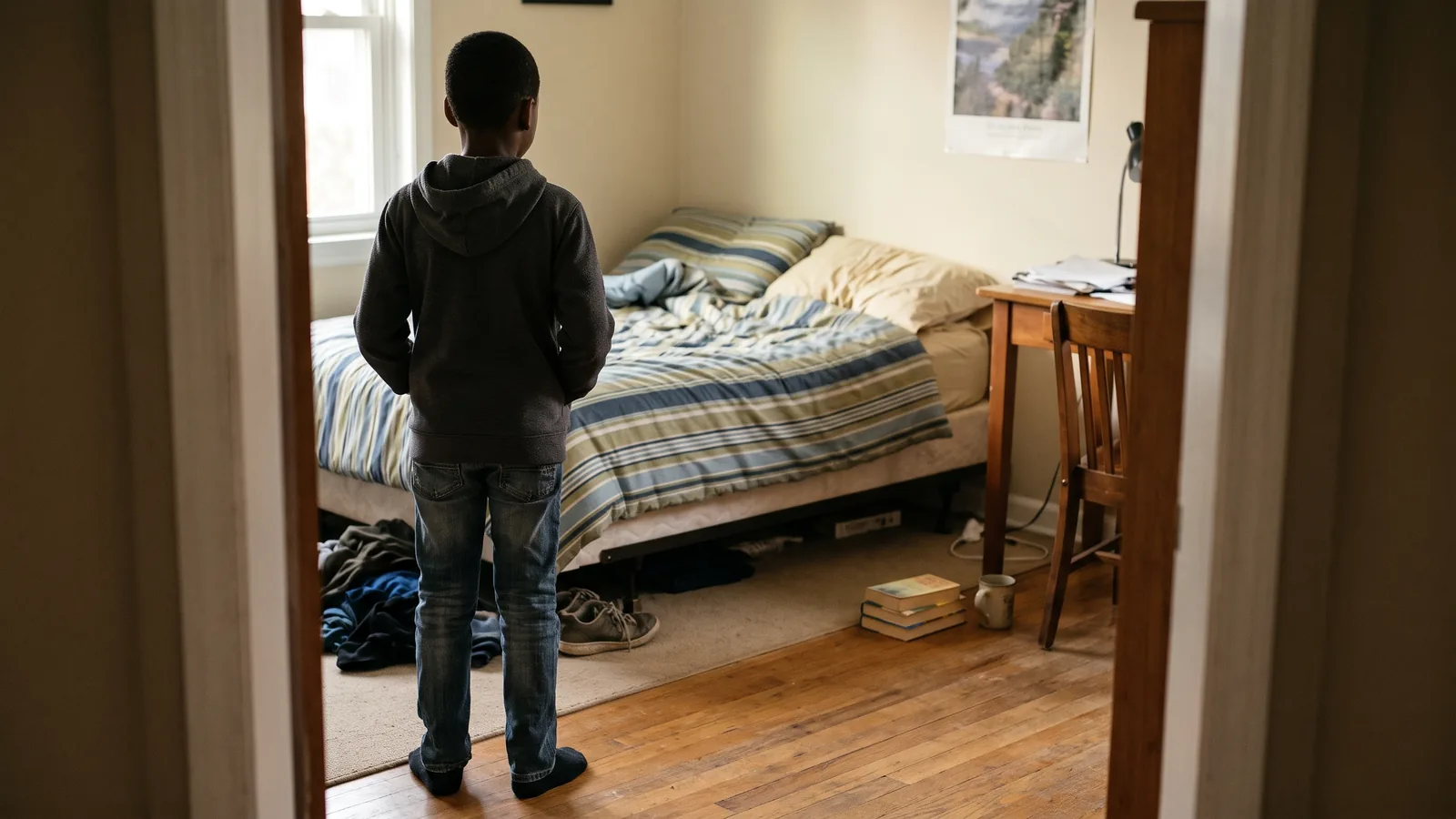
"Did you do your chores?" "Yep." Then you walk past the bathroom and the towels are still on the floor. Most advice about kids lying covers lying in general. This is the narrow, everyday version: a kid who says a chore is done when it isn't.
I have three boys, aged 7, 10 and 13, and a one-year-old daughter, and I have heard my share of "done" about jobs that weren't. Here is what the research says about why kids lie to parents, and what to change in a chore system so the lie stops paying.
When your kid lies about doing a chore, deal with the chore and the lie separately, and keep the consequence small. Send the job back to be finished, then make the truth the cheaper answer: "not done yet" costs nothing extra, while a false "done" costs a little more, the same day. And stop treating a kid's word as the finish line. A job counts once someone has looked at it, which takes away most of the reason to lie.
Why do kids lie about doing their chores?
Mostly to avoid trouble, and sometimes because their idea of done is not yours. The American Academy of Pediatrics says children who lie "may be afraid of disappointing their parents or being punished," and often already feel guilty about it (AAP, HealthyChildren.org). A chore question hands a kid an easy way out of both: one word, and the conversation is over.
The second reason looks less like lying. "Kids with ADHD struggle with starting and planning out tasks. So, they might not do them, and then lie and say they did," as Understood.org puts it, and plenty of children without a diagnosis do a milder version of the same thing. Some "done" is honest by the kid's own standard, too. If the real gap is that your kid's idea of "done" and yours don't match, start with what to do when your kid does a chore badly, which is about teaching what done looks like.
Should you punish a kid for lying about chores?
Yes, but lightly, and never so hard that hiding becomes the smart move. The AAP is blunt that "harsh punishment is usually not very effective," and warns that parents who become extremely negative can push a child into lying again to protect themselves. The consequence for the lie should be small, certain and soon, the same rules that work for any skipped chore in what to do when a kid doesn't care about consequences.
There is research pointing the same way. At two West African schools in one neighbourhood, one using corporal punishment and one using time-outs and scolding, 29 of 31 preschoolers at the punitive school lied about peeking at a forbidden toy, against 20 of 36 at the other, and the punitive-school children were better at keeping the lie going (Talwar and Lee, Child Development, 2011). That study can't tell you how much a light consequence helps, and plenty of children lied at the gentler school too. It does show which direction harshness pushes.
How do you make telling the truth the easier option?
Make sure that saying "I haven't done it yet" never gets a kid into more trouble than saying "I did it" when they didn't. If both answers end with the job going back plus a punishment, lying is the only answer with a chance of working. The AAP's suggested line is "you will get in much less trouble if you tell the truth instead of lying," and a chore system can make that literally true.
| What the kid says | What you find | What happens |
|---|---|---|
| "Done" | It's done | It counts, and any pay for it goes through |
| "Not yet" or "I did half" | That's true | Finish it before screens or friends, nothing extra |
| "Done" | It's half done, or not started | Finish it now, plus one small cost the same day, such as 15 minutes off screen time |
How you ask matters too. In a study of 372 children aged 4 to 8, kids told that the adult would be pleased if they told the truth were more honest than kids given no appeal at all (Talwar, Arruda and Yachison, Journal of Experimental Child Psychology, 2015). So try "I'll be glad if you tell me the truth. Have you done your chores yet?" And if you have already seen the towels, don't ask at all. The AAP's advice is to tell your child "immediately" that you can see the job isn't done.
How do you stop kids lying about chores in the first place?
Stop asking and start looking. When a chore counts only after someone has checked it, a kid has nothing to gain from saying "done" early. That doesn't mean inspecting all day. Choose one moment each day to check, such as right before screen time, and go look at the chores then. Tonight it can be as short as: "The towels are still on the floor. Please pick them up. And next time, if a job isn't done yet, just tell me. You won't get in trouble for that."
Once, buried in work, I took a son's word that his chores were done and found the next morning that only the easy half was. I wrote that up in getting kids to do chores when you work full time. When you can't be there to look, your kid needs to leave you something you can check later, like a photo or a tap you approve. In GrowTide, a kid taps "I Did It!" and the job waits for a parent to approve it or send it back to redo, and points or allowance arrive only on approval. You can also ask for a photo: turn on photo proof for a job and the kid has to take a picture of the finished chore before they can mark it done, so you can see the made bed or the empty sink from wherever you are. Photo proof is part of GrowTide Pro, and the photos are deleted 90 days after you approve the job. That tap-then-approve step is how GrowTide handles approvals. A printable weekly chore chart with a column for a parent's tick gives you the same check on paper.
When is lying about chores a sign of something bigger?
When it is constant, when it spreads well past chores, or when small, steady consequences make no difference after a few weeks. Some lying is a normal part of growing up. In the 2015 study of 372 children aged 4 to 8 (Talwar and colleagues), the older children were more likely to lie and to stick to the lie under follow-up questions, so getting better at it is part of getting older.
If chore lies come with a child who can't seem to start or sequence a job at all, look at that first. Short written steps often remove the reason for the lie, which I covered in how to get kids with ADHD to do chores. If lying shows up everywhere, at school, with friends, about things that carry no trouble at all, talk to your pediatrician. The AAP also says a parent's "own style of telling the truth" is one of the most important ways children learn it, which is uncomfortable reading for anyone who has ever told a kid the ice cream shop was closed.
One of my sons once told me, for the third time that week, that he had finished cleaning his room. I counted 17 things still on the floor.
Vince is a dad of four and the founder of GrowTide — a family chore and rewards app built by a parent who needed it to actually work. Download GrowTide
This post is one parent's experience, not professional parenting, medical, or psychological advice. Every kid is different, and if what you're dealing with is bigger than a chore system can hold, a family therapist or your pediatrician is a better starting point than a blog.
Frequently asked questions
Why do kids lie about doing their chores?
Mostly to avoid trouble or a parent's disappointment, which is how the American Academy of Pediatrics explains most children's lies. Some kids also skip a job they don't know how to start and then say they did it, and some honestly think a half-done job is finished.
Should you punish a kid for lying about chores?
Lightly. Have the job finished, add one small consequence the same day, such as 15 minutes off screen time, and stop there. The AAP says harsh punishment is usually not very effective, and research on young children found that harsher discipline went with more lying, not less.
What do you say when your kid says a chore is done and it isn't?
Say what you saw instead of asking a question you already know the answer to: "The towels are still on the floor. Pick them up." Then tell them that next time, if a job isn't done yet, they can just say so and won't get in trouble for it.
How do you get kids to tell the truth about chores?
Make the truth the cheaper answer. An honest "not yet" means finishing the job with nothing extra, while a false "done" means finishing it plus a small cost. In one study of children aged 4 to 8, kids told the adult would be pleased by the truth were more honest.
How do you stop kids from lying about chores?
Check the job instead of asking about it. Choose one moment each day to check, such as right before screen time, and count a chore as done only once someone has looked at it. A chore app with parent approval, or a paper chart with a parent's tick column, does this when you can't be in the room.
Like this? Get the next one in your inbox.
No-fluff parenting tips on chores, allowance, and screen time — from a dad of four. New posts only, no spam.
You're subscribed!
We'll email you whenever a new post goes up.
By subscribing you agree to our Privacy Policy. · Also get the app: Google Play · App Store